When, and why, is an OCT scan too poor to correctly identify healthy eyes?

AUTHORS:

Hood DC; Sun AJ; Gebhardt T; La Bruna S; Wang Y; Lee C; Durbin M; Tsamis E

PUBLICATION:

ARVO 2026 Abstract / Conference Presentation

Study Purpose

To classify OCT report quality according to its purpose and determine the factors that make scans too poor to reliably identify healthy eyes.

Overview

Study Design

    Cross-sectional reading-center study of widefield Maestro OCT reports collected at optometry sites involved in refractive care. Reports were categorized as Healthy Metric, Healthy Suitable, Pathology/Pathology Suspect, or Poor, and poor scans were further classified by dominant artifact type.

# of Eyes/
Patients

6742 eyes/individuals

Study Device

    Widefield OCT using Maestro (Topcon Corporation, Tokyo, Japan)

Outcome Measures

Distribution of scan-quality categories by age, frequency of major causes of poor scans (global weak signal, clipping, eye movement/blinks, disk or fovea centering), and relationship between reading-center quality classifications and the commercial Image Quality Score (IQS).


Results

    The percentage of scans graded Healthy Metric decreased with increasing age, while Healthy Suitable, Pathology/Pathology Suspect, and Poor classifications increased. Among eyes older than 80 years, only 33.5% were graded Healthy Metric, whereas 35.1% were graded Pathology/Pathology Suspect and 23.5% were graded Poor. In eyes aged 70 years and older, global weak signal accounted for 68% of poor scans, while clipping was the leading cause among adults aged 30-49 years (34%). The Image Quality Score was a poor predictor of the reading-center scan-quality grades.

IMOvifa reduced measurement time by

39%

Conclusions

Age is a major predictor of poor-quality OCT scans in community optometry settings. For older adults, especially those over 70 years, qualitative review and/or improved acquisition methods may be needed because standard metric-based assessment alone is often insufficient to reliably identify healthy eyes.

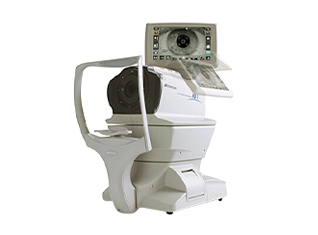
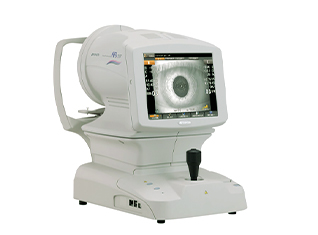
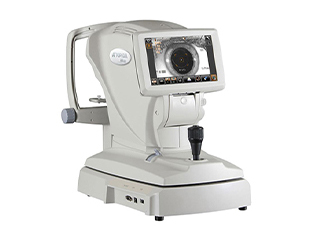
Product Comparison

Rotary Prism
Autorefraction

Keratometry

Auto Measure

Auto Right/Left

Full Auto
Align/Measurement

Rotary Prism
Autorefraction

Keratometry

Corneal Topography

Auto Measure

Auto Right/Left

Full Auto
Align/Measurement

Rotary Prism
Autorefraction

Keratometry

Auto Measure

Size and Weight

Height
XX Inches

Width
XX Inches

Depth
XX Inches

Weight
XX Pounds

Height
XX Inches

Width
XX Inches

Depth
XX Inches

Weight
XX Pounds

Height
XX Inches

Width
XX Inches

Depth
XX Inches

Weight
XX Pounds

Lorem Ipsum

X.X”

360° Rotating
Touchscreen

Control Lever

X.X”

LCD Screen Panel

Wavefront

Control Lever

8.5″

LCD Screen Panel

Lorem Ipsum

EMR

EMR Connectivity

Corneal Aberrometry

Ocular Aberrometry

Pupillometry

Tear Film Assessment

Viewer Software Available

EMR

EMR Connectivity

EMR

EMR Connectivity

The Topcon Healthcare Ophthalmology Solution

Lorem ipsum dolor sit, consectetuer adipiscing elit, sed diam nonummy.

The Topcon Healthcare Myopia Solution

Lorem ipsum dolor sit, consectetuer adipiscing elit, sed diam nonummy.

Fundus Cameras

Lorem ipsum dolor sit, consectetuer adipiscing elit, sed diam nonummy.

Fundus Cameras

Lorem ipsum dolor sit, consectetuer adipiscing elit, sed diam nonummy.