To evaluate the predictive ability of baseline widefield OCT–based risk scores for the development of perimetric glaucoma in glaucoma suspect eyes.
Overview
Study Design
A prospective cohort study
# of Eyes/ Patients
257 glaucoma suspect eyes with normal visual fields (VFs) at baseline from 180 patients
Study Device
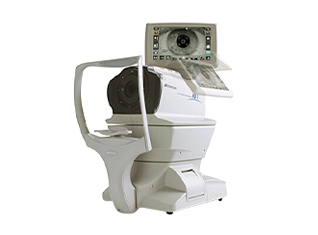
DRI Triton SS-OCT (Topcon, Tokyo, Japan)
Outcome Measures
Time-dependent receiver operating characteristic (ROC) curves and decision curve analysis evaluated model performance and clinical utility.
Results
The mean follow-up time for glaucoma suspects was 2.8 years. During this period, 80 suspect eyes progressed to perimetric glaucoma. Circumpapillary retinal nerve fiber layer (RNFL) thickness, ganglion cell complex thickness, ganglion cell-inner plexiform layer thickness, mean deviation, and the 3 OCT-based risk scores were predictors of progression in univariable models, showing significant hazard ratios, whereas only the OCT-based risk scores remained statistically significant in multivariable models. Each 10-point increase in OCT-based risk scores across the 3 models corresponded to a 1.15-fold to 1.21-fold increase in risk. The risk scores demonstrated higher area under ROCs, compared to individual OCT parameters, across all time points. Decision curve analysis showed that individual OCT parameters offered no greater net benefit than treating all patients regardless of risk, whereas the Fukai risk scores consistently yielded higher net benefit.
IMOvifa reduced measurement time by
39%
Conclusions
Baseline OCT-based risk scores from a single wide scan, incorporating both peripapillary RNFL and macular thickness measurements, are associated with the subsequent development of perimetric glaucoma development in glaucoma suspect eyes, offering valuable insights for risk stratification in a single integrated metric and may aid in early intervention and clinical management in glaucoma suspects.