The study was designed to describe the macular choroidal thickness profiles and investigate possible determinants of choroidal thickness among children with different degrees of myopia.
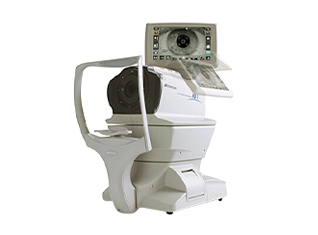
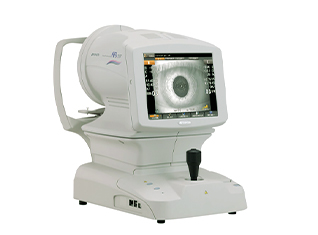
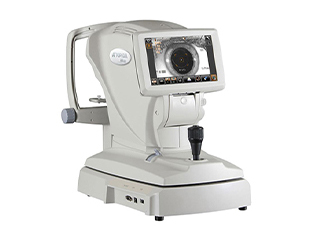
Aladdin HW3.0 (Visia Imaging S.r.l., San Fiobanni, Valdarno, Italy)
Grand Seiko Opn Field autorefractor (WAM-5500 Auto Ref/Keratometer; Grand Seiko, Kawaga, Japan)
Outcome Measures
• Axial length, anterior chamber depth, central corneal thickness, lens thickness. • Corrected VA, cycloplegic refraction • Choroidal thickness
Results
Overall mean ± SD subfoveal choroidal thickness was 234.9 ± 63.7 μm (range, 78.6 to 391.1 μm). Subfoveal choroidal thickness was negatively correlated with axial length, each additional millimeter in axial length equated to a 21-μm thinner choroidal thickness (R = −0.35, P < .001), and positively correlated with spherical equivalent refraction, with each additional diopter of myopia equating to a 10μm thinner choroidal thickness (R = 0.30, P < . 001)
Overall, repeated-measures analysis of variance showed that choroidal thickness varied significantly across the macular locations (F8,1928 = 431.6, P < .001): thickest in the perifoveal superior region (mean ± SD, 249.0 ± 60.8 μm) and thinnest in the perifoveal nasal region (155.1 ± 50.3 μm). This was consistent for low and moderate myopia, but the parafoveal temporal region was thickest in high myopia (211.1 ± 60.3 μm)
Participants with longer axial length (≥26 mm) exhibited significantly thinner choroidal thickness compared with shorter (≤24 mm) and medium (>24 to < .001 for all). The high myopia group had significantly thinner choroidal thickness compared with the low myopia group at all locations with the biggest and smallest mean differences between high and low myopia observed in the subfoveal (−57.3 μm) and perifoveal nasal (−32.8 μm) regions, respectively (P < .001).
IMOvifa reduced measurement time by
39%
Conclusions
• Axial length and spherical equivalent refraction were the key determinants of choroidal thickness, each accounting for approximately 10% of the variance in subfoveal choroidal thickness. • Assessment of choroidal thickness may provide additional information to assist in identifying myopic children most at risk of myopic progression or future chorioretinal disease