Identification of the most efficient (targeted) microperimetry pattern for obtaining valid functional endpoints in geographic atrophy

AUTHORS:

Schmidt-Erfurth U; Gumpinger M; Byrne F; Miranda ME; Foos E; Schwartz R; Baumal CR; Leingang O

PUBLICATION:

ARVO 2026 Abstract / Conference Presentation

Study Purpose

To identify the most efficient microperimetry pattern for detecting meaningful functional change in geographic atrophy due to age-related macular degeneration by comparing standard, circumferential, and AI-guided targeted grids.

Overview

Study Design

    Retrospective analysis of curated untreated fellow-eye data from the OAKS and DERBY trials from baseline to month 24. OCT-based AI segmentation of complete retinal pigment epithelium (RPE) loss and ellipsoid zone (EZ) loss was used to compare a 68-point standard grid, a 60-point circumferential grid, and a 40-point targeted grid optimized to sample areas of EZ loss. The method was developed in 130 eyes and tested in 110 eyes.

# of Eyes/
Patients

240 eyes total (130 development; 110 test)

Study Device

    OCT with AI segmentation using GA Monitor v2 (RetInSight, Vienna, Austria) to generate targeted microperimetry patterns

Outcome Measures

Point-wise conversion rates at month 24 for RPE loss progression and general morphological conversion, odds ratios versus comparator grids, predicted retinal sensitivity change across grids, and efficiency per test point, including analyses of top-scoring targeted-grid points.


Results

    At month 24, the targeted grid outperformed both comparator patterns. RPE conversion rates were 34.16% for the targeted grid, 27.5% for the circumferential grid, and 16.84% for the standard grid; general conversion rates were 47.98%, 44.17%, and 27.32%, respectively (all p < 0.0001). Compared with the standard grid, odds of detecting conversion were higher for the circumferential grid (OR 1.96 for RPE conversion; OR 2.14 for general conversion) and highest for the targeted grid (OR 2.70 and OR 2.50, respectively). Predicted retinal sensitivity loss was greatest with the targeted grid, and efficiency analyses showed stronger signal detection with fewer test points, including when only the top 5 targeted points were evaluated.

IMOvifa reduced measurement time by

39%

Conclusions

AI-guided targeted microperimetry focused on areas of EZ loss provides the strongest endpoint signal while reducing the number of test points and testing burden. This approach may improve the sensitivity, feasibility, and clinical relevance of functional endpoints in geographic atrophy trials and longitudinal monitoring.

Product Comparison

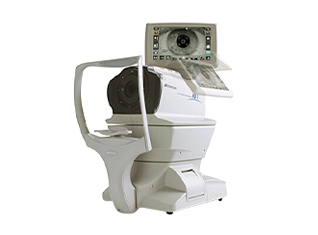
Rotary Prism
Autorefraction

Keratometry

Auto Measure

Auto Right/Left

Full Auto
Align/Measurement

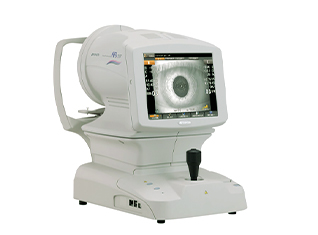
Rotary Prism
Autorefraction

Keratometry

Corneal Topography

Auto Measure

Auto Right/Left

Full Auto
Align/Measurement

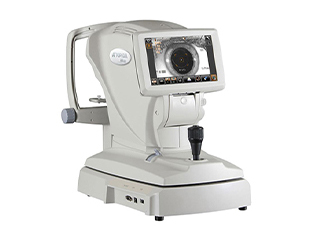
Rotary Prism
Autorefraction

Keratometry

Auto Measure

Size and Weight

Height
XX Inches

Width
XX Inches

Depth
XX Inches

Weight
XX Pounds

Height
XX Inches

Width
XX Inches

Depth
XX Inches

Weight
XX Pounds

Height
XX Inches

Width
XX Inches

Depth
XX Inches

Weight
XX Pounds

Lorem Ipsum

X.X”

360° Rotating
Touchscreen

Control Lever

X.X”

LCD Screen Panel

Wavefront

Control Lever

8.5″

LCD Screen Panel

Lorem Ipsum

EMR

EMR Connectivity

Corneal Aberrometry

Ocular Aberrometry

Pupillometry

Tear Film Assessment

Viewer Software Available

EMR

EMR Connectivity

EMR

EMR Connectivity

The Topcon Healthcare Ophthalmology Solution

Lorem ipsum dolor sit, consectetuer adipiscing elit, sed diam nonummy.

The Topcon Healthcare Myopia Solution

Lorem ipsum dolor sit, consectetuer adipiscing elit, sed diam nonummy.

Fundus Cameras

Lorem ipsum dolor sit, consectetuer adipiscing elit, sed diam nonummy.

Fundus Cameras

Lorem ipsum dolor sit, consectetuer adipiscing elit, sed diam nonummy.